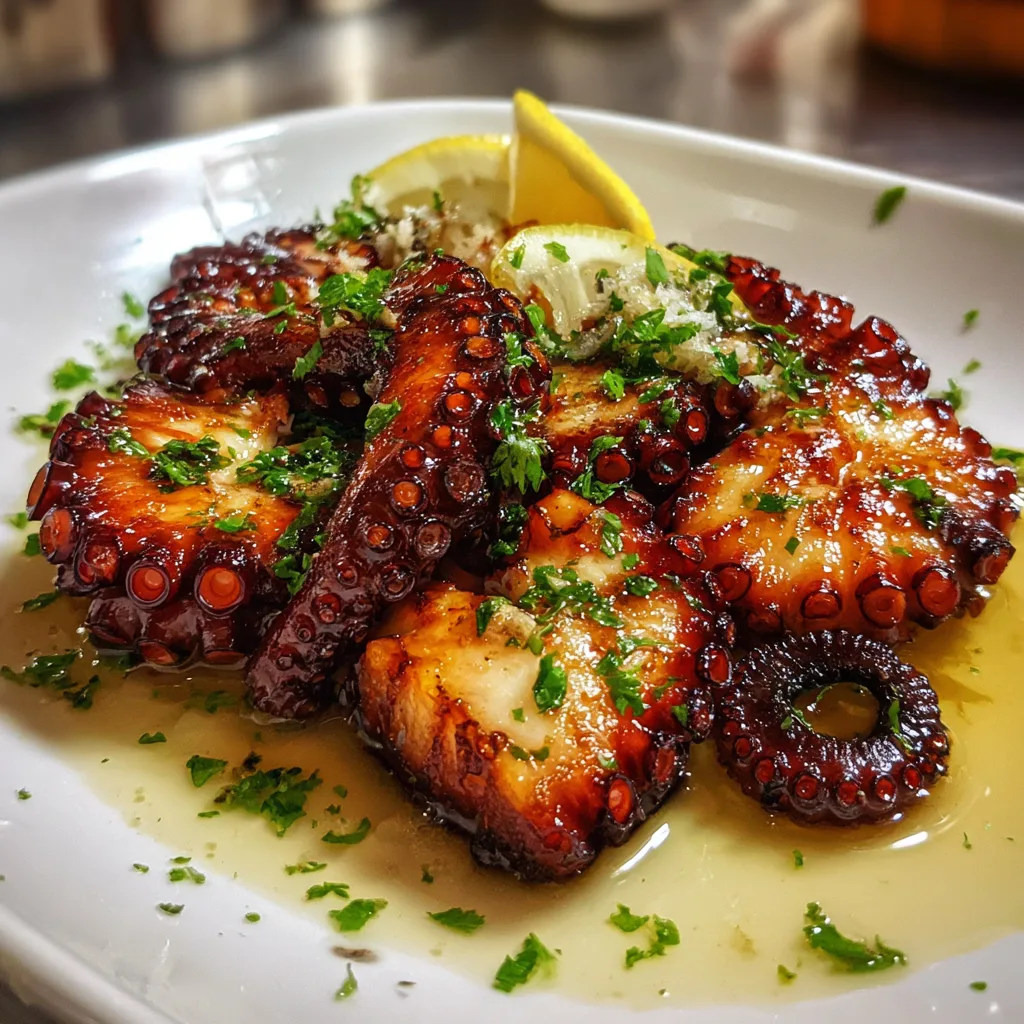
Introduction
Boiled octopus is one of those dishes that looks impressive yet is surprisingly simple when prepared correctly. When cooked slowly and carefully, octopus becomes incredibly tender, juicy, and full of delicate seafood flavor. This classic recipe creates perfectly cooked octopus that can be served warm, chilled in salads, grilled afterward, or paired with olive oil and fresh herbs for a Mediterranean-inspired meal.
What makes this recipe special is the gentle simmering process that transforms the octopus from tough to beautifully tender. The aromatics added to the cooking water infuse subtle flavor while keeping the meat soft and succulent. I once added lemon peel and bay leaves to the pot, and the fresh citrus aroma made the octopus taste even more vibrant and delicious.
This dish is popular across Mediterranean and coastal cuisines because of its clean flavors and versatility. Whether served as an appetizer, seafood platter centerpiece, or light main course, boiled octopus delivers elegant flavor with surprisingly minimal ingredients.
Print
Tender and Flavorful Boiled Octopus Recipe
- Total Time: 1 hour 15 minutes
- Yield: 4 servings
- Diet: Halal
Description
A tender and flavorful boiled octopus recipe prepared with simple aromatics and cooked until perfectly soft—ideal for salads, seafood platters, or Mediterranean dishes.
Ingredients
- 1 whole octopus (about 1.5kg), cleaned
- 1 onion, halved
- 3 cloves garlic
- 2 bay leaves
- 1 lemon, sliced
- 1 tablespoon black peppercorns
- 2 tablespoons olive oil
- 1 teaspoon salt
- Fresh parsley, chopped (for garnish)
- Water, enough to cover
Instructions
- Rinse the octopus thoroughly under cold water.
- Fill a large pot with enough water to cover the octopus.
- Add onion, garlic, bay leaves, lemon slices, peppercorns, and salt.
- Bring the water to a gentle boil.
- Dip the octopus into the water 2-3 times before fully submerging to help curl the tentacles.
- Reduce heat to a simmer and cook for 45-60 minutes until tender.
- Check tenderness by inserting a knife into the thickest part of the tentacle.
- Remove octopus and let rest for a few minutes.
- Drizzle with olive oil and garnish with parsley before serving.
- Slice and serve warm or chilled.
Notes
- Cooking time may vary depending on octopus size.
- Do not boil aggressively to keep the octopus tender.
- You can grill the boiled octopus afterward for extra flavor.
- Serve with lemon wedges and olive oil.
- Store leftovers in the fridge for up to 2 days.
- Prep Time: 15 minutes
- Cook Time: 1 hour
- Category: Main Course
- Method: Boiled
- Cuisine: Mediterranean
Why You’ll Love This Recipe
This boiled octopus recipe creates tender seafood with delicate flavor and perfect texture. The slow cooking process allows the octopus to become soft without losing its natural richness.
Another reason to love this recipe is its versatility. You can serve it warm, chilled, grilled, or sliced into salads and seafood dishes.
It is also a healthy and protein-rich meal that feels elegant while remaining simple to prepare.
Ingredients
(Tip: You can find the complete list of ingredients and their measurements in the recipe card below.)
Fresh or Frozen Octopus
Octopus is the main ingredient and becomes tender when slowly simmered properly.
Water
Water forms the cooking base and gently cooks the octopus evenly.
Bay Leaves
Bay leaves add subtle aromatic flavor to the cooking liquid.
Garlic Cloves
Garlic gives the octopus mild savory depth and fragrance.
Black Peppercorns
Peppercorns add gentle warmth and enhance the seafood flavor.
Salt
Salt seasons the octopus and balances the flavors.
Lemon
Lemon adds freshness and brightness that pairs beautifully with seafood.
Olive Oil
Olive oil adds richness and helps finish the octopus beautifully before serving.
Onion
Onion adds sweetness and aroma to the cooking broth.
Fresh Parsley
Parsley adds freshness and color to the finished dish.
Directions
Begin by cleaning the octopus thoroughly if not already prepared. Rinse it under cold water and remove any remaining internal parts if necessary.
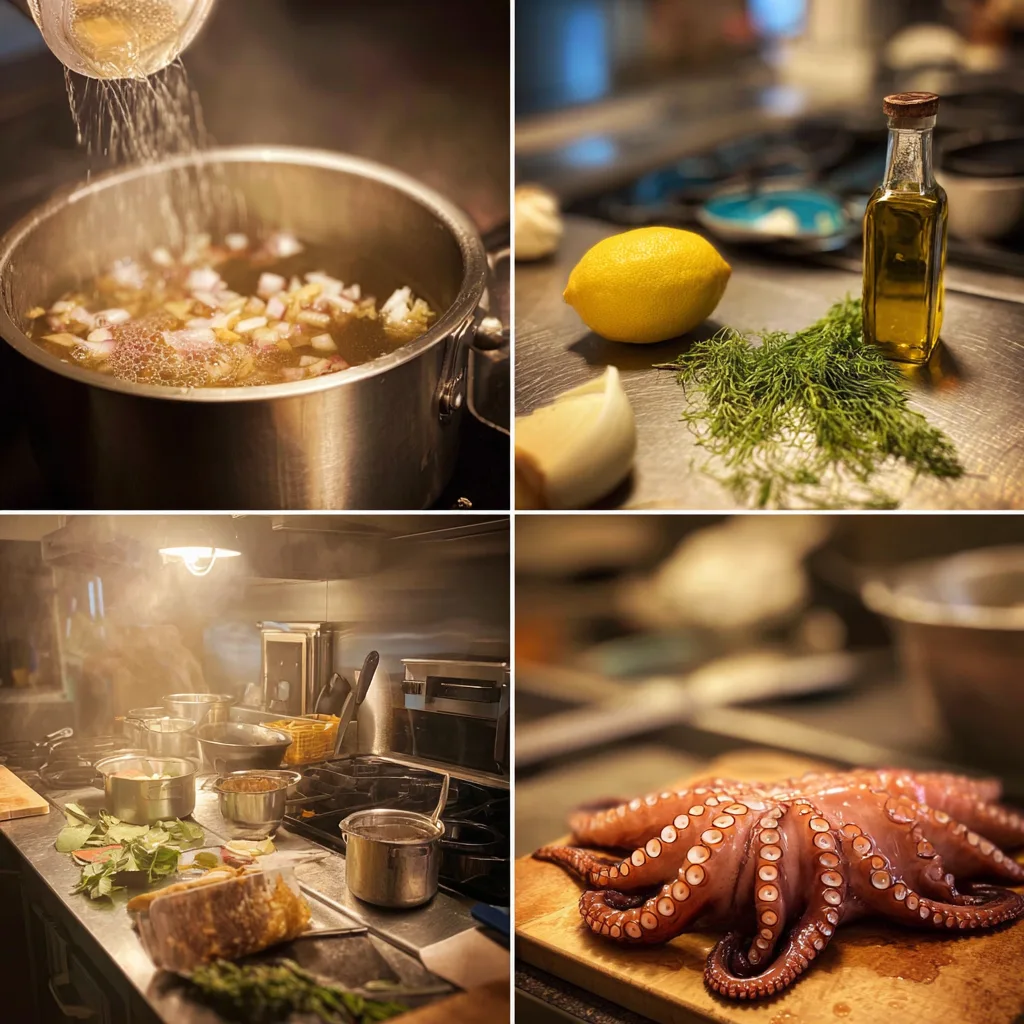
Fill a large pot with water and add bay leaves, garlic cloves, onion, peppercorns, and salt. Bring the water to a gentle boil.
Before fully submerging the octopus, carefully dip the tentacles into the hot water a few times. This helps the tentacles curl beautifully during cooking.
Lower the octopus completely into the pot and reduce the heat to a gentle simmer. Avoid rapid boiling, as this can make the texture tough.
Cover partially and simmer for about 45 to 60 minutes depending on the size of the octopus. Test tenderness by inserting a knife into the thickest part of a tentacle. It should slide in easily.
Once tender, remove the octopus from the pot and allow it to cool slightly. Drizzle with olive oil and fresh lemon juice before serving.
Slice the tentacles if desired and garnish with chopped parsley, extra olive oil, and lemon wedges.
Equipment needed :
Must-Have Tools to Get Rolling
Here’s what you’ll want to have on hand:
Here’s what you’ll want to have on hand:
Silicone Spatula – Durable, heat-resistant silicone spatula perfect for mixing, scraping, and spreading. Gentle on non-stick cookware and easy to clean.
Large pot – You’ll need this to boil the whole cabbage head and soften the leaves.
large bowl –Spacious, durable large bowl ideal for mixing, serving, or food preparation. Made from sturdy material and easy to clean.
Sharp knife – For coring the cabbage and slicing out the thick stem in each leaf. A paring knife works best.
Mixing bowl – A big bowl makes it easier to combine your meat and rice filling evenly.
Cutting board – For prepping cabbage leaves and rolling them like a pro.
Full-Size Blender – is a powerful kitchen appliance for making smoothies, soups, and sauces in large batches.
3-in-1 Air Fryer – This versatile 3-in-1 air fryer offers Air Fry for healthier meals with less oil, Bake for bakery-quality desserts and treats, and Reheat to bring leftovers back to life with crispy, flavorful results
Servings and timing
This recipe makes approximately 4 servings.
Preparation time: 15 minutes
Cooking time: 1 hour
Total time: About 1 hour 15 minutes
Storage/reheating
Store leftover boiled octopus in an airtight container in the refrigerator for up to three days.
To reheat, gently warm it in a skillet with olive oil or briefly steam it until heated through. Avoid overcooking during reheating, as the texture may become rubbery.
Boiled octopus can also be enjoyed cold in salads or seafood platters.
Variations and Customizations
One of the best things about boiled octopus is how adaptable it is across different cuisines and serving styles. Once cooked, the octopus can be transformed into a variety of flavorful dishes.
For a Mediterranean-style presentation, drizzle the octopus with olive oil, lemon juice, parsley, and flaky sea salt. I once added smoked paprika and grilled the tentacles lightly afterward, and the smoky char elevated the flavor beautifully.
If you enjoy spicy seafood dishes, add chili flakes, garlic oil, or spicy herb sauces before serving. These flavors pair wonderfully with the tender seafood texture.
Boiled octopus also works beautifully in salads. Slice the tentacles and combine them with cherry tomatoes, cucumbers, olives, capers, and fresh herbs for a refreshing Mediterranean seafood salad.
For a Spanish-inspired version, serve the octopus over boiled potatoes with paprika and olive oil, similar to traditional pulpo a la gallega.
Asian-inspired variations can include soy sauce, sesame oil, ginger, and scallions for a lighter umami-rich flavor profile.
If you prefer a smoky finish, grill the cooked octopus for a few minutes after boiling. This creates crispy charred edges while keeping the interior tender and juicy.
You can also pair boiled octopus with pasta, risotto, roasted vegetables, or crusty bread for a more complete meal.
Fresh herbs like dill, basil, cilantro, or oregano can completely change the flavor profile depending on the style of cuisine you want to create.
Nutrition and Dietary Info
| Nutrient | Per Serving |
|---|---|
| Calories | 220 |
| Protein | 32g |
| Carbs | 4g |
| Fat | 8g |
| Saturated Fat | 1g |
| Fiber | 1g |
| Sugar | 1g |
| Sodium | 620mg |
Expert Tips & Customizations
Simmer Gently
A gentle simmer keeps the octopus tender instead of rubbery.
Use Aromatics
Garlic, bay leaves, and onion add subtle flavor during cooking.
Test for Tenderness
Cooking times vary depending on octopus size, so check with a knife for softness.
Grill After Boiling
Light grilling adds smoky flavor and crispy texture.
Serve with Lemon
Fresh lemon brightens the seafood flavor beautifully.
FAQs
How do I know when octopus is fully cooked?
The thickest part of the tentacle should feel tender when pierced with a knife.
Why is my octopus rubbery?
Cooking too quickly or not long enough can create a tough texture.
Can I use frozen octopus?
Yes, frozen octopus works very well and is often more tender after thawing.
Do I need to remove the skin?
No, the skin is edible and helps keep the octopus flavorful during cooking.
Can I grill boiled octopus afterward?
Absolutely, grilling after boiling creates excellent texture and smoky flavor.
What side dishes pair well with octopus?
Potatoes, salads, grilled vegetables, rice, and crusty bread all pair wonderfully.
Conclusion
This Tender and Flavorful Boiled Octopus Recipe proves that elegant seafood dishes can be simple and approachable at home. With slow simmering and fresh ingredients, the octopus becomes beautifully tender while maintaining its delicate flavor.
Perfect as an appetizer, salad topping, or main seafood dish, boiled octopus is versatile, healthy, and incredibly satisfying. Once you master this cooking method, it quickly becomes one of the most impressive seafood recipes to prepare for family and guests alike.
Hungry for more? Visit our website for full recipes and follow us on Pinterest for daily foodie inspo you’ll love to pin!