Introduction
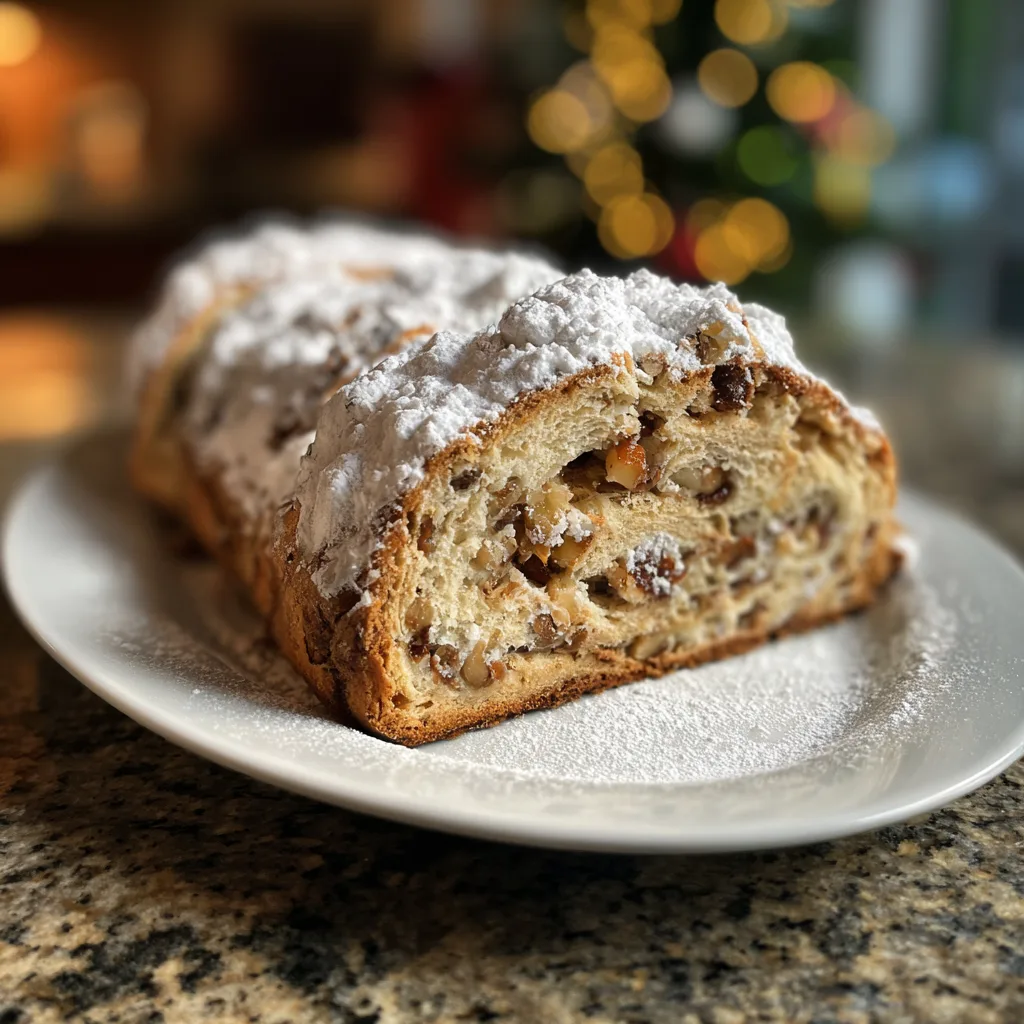
German Nussstollen, or Nut Stollen, is a classic festive bread that holds a special place in traditional German baking. Known for its dense yet tender crumb, this yeast-based loaf is generously filled with nuts and lightly sweetened, making it both hearty and comforting. Unlike fruit-heavy stollen varieties, Nussstollen focuses on the warm, toasty flavor of nuts, which gives it a deeply satisfying richness. Traditionally enjoyed during the Christmas season, this bread is perfect with a cup of coffee or tea and improves in flavor as it rests. I tested this recipe with a blend of ground hazelnuts and almonds, and the result was wonderfully aromatic and moist without being heavy. German Nussstollen is not just a bread; it is a celebration of slow baking, tradition, and simple ingredients transformed into something special.
Print
German Nussstollen (Nut Stollen): A Rich, Traditional Holiday Bread
- Total Time: 2 hours 30 minutes
- Yield: 1 loaf (10 slices)
- Diet: Vegetarian
Description
German Nussstollen (Nut Stollen) is a traditional Christmas bread filled with nuts, lightly sweetened dough, and warm spices, finished with a coating of butter and powdered sugar.
Ingredients
- 4 cups all-purpose flour
- 1/2 cup granulated sugar
- 2 1/4 teaspoons active dry yeast
- 1/2 cup warm milk
- 1 cup unsalted butter, softened (plus extra for brushing)
- 2 large eggs
- 1/2 teaspoon salt
- 1 teaspoon vanilla extract
- 1 teaspoon ground cinnamon
- 1/2 teaspoon ground nutmeg
- 1 cup chopped almonds
- 1 cup chopped hazelnuts or walnuts
- 1/4 cup raisins (optional)
- 1/2 cup powdered sugar (for coating)
Instructions
- Dissolve yeast in warm milk with 1 tablespoon of sugar and let stand for 5–10 minutes until foamy.
- In a large bowl, combine flour, remaining sugar, salt, cinnamon, and nutmeg.
- Add yeast mixture, eggs, butter, and vanilla; mix until a soft dough forms.
- Knead dough for 8–10 minutes until smooth and elastic.
- Knead in chopped nuts and raisins until evenly distributed.
- Place dough in a greased bowl, cover, and let rise for 1–1 1/2 hours until doubled in size.
- Preheat oven to 350°F (175°C) and line a baking sheet with parchment paper.
- Shape dough into an oval loaf and place on the baking sheet.
- Bake for 35–40 minutes until golden brown.
- Brush hot stollen generously with melted butter.
- Dust heavily with powdered sugar and cool completely before slicing.
Notes
- Flavor improves after resting for a day.
- Wrap tightly to store for up to one week.
- Traditionally served during the Christmas season.
- Prep Time: 25 minutes
- Cook Time: 40 minutes
- Category: Bread
- Method: Baking
- Cuisine: German
Why You’ll Love This Recipe
This recipe delivers authentic German flavor with a nut-forward profile that feels rich but balanced. It is perfect for holidays, gifting, or make-ahead baking, as the bread keeps well and develops flavor over time. The texture is tender, the crumb is satisfying, and the aroma alone makes it worth baking.
Ingredients
(Tip: You can find the complete list of ingredients and their measurements in the recipe card below.)
All-purpose flour provides structure and creates the classic dense yet tender stollen texture.
Active dry yeast allows the dough to rise gently, giving the bread lightness without losing richness.
Milk hydrates the dough and contributes to a soft crumb.
Unsalted butter adds richness and traditional flavor to the bread.
Granulated sugar lightly sweetens the dough without overpowering the nut flavor.
Egg enriches the dough and improves texture.
Ground nuts such as hazelnuts or almonds are the star ingredient, adding depth and moisture.
Chopped nuts provide texture and a pleasant bite throughout the loaf.
Vanilla sugar adds subtle sweetness and classic aroma.
Salt balances sweetness and enhances all flavors.
Lemon zest adds freshness and prevents the bread from tasting heavy.
Powdered sugar is used for the traditional finishing dusting.
Directions
Begin by warming the milk slightly and dissolving the yeast in it. Allow it to activate until foamy. In a large bowl, combine flour, sugar, salt, lemon zest, and ground nuts. Add the yeast mixture, egg, and softened butter, then knead until a smooth, slightly firm dough forms.
Fold in the chopped nuts until evenly distributed. Cover the dough and allow it to rise until slightly puffed. Shape the dough into an oval loaf and place it on a baking tray. Let it rest briefly, then bake until golden and fragrant.
While still warm, brush the loaf generously with melted butter and dust heavily with powdered sugar. Allow the stollen to cool completely before slicing for best texture and flavor.
Equipment needed :
Must-Have Tools to Get Rolling
Here’s what you’ll want to have on hand:
Silicone Spatula – Durable, heat-resistant silicone spatula perfect for mixing, scraping, and spreading. Gentle on non-stick cookware and easy to clean.
Large pot – You’ll need this to boil the whole cabbage head and soften the leaves.
large bowl –Spacious, durable large bowl ideal for mixing, serving, or food preparation. Made from sturdy material and easy to clean.
Sharp knife – For coring the cabbage and slicing out the thick stem in each leaf. A paring knife works best.
Mixing bowl – A big bowl makes it easier to combine your meat and rice filling evenly.
Cutting board – For prepping cabbage leaves and rolling them like a pro.
Full-Size Blender – is a powerful kitchen appliance for making smoothies, soups, and sauces in large batches.
3-in-1 Air Fryer – This versatile 3-in-1 air fryer offers Air Fry for healthier meals with less oil, Bake for bakery-quality desserts and treats, and Reheat to bring leftovers back to life with crispy, flavorful results
Servings and timing
This recipe makes one medium loaf, serving approximately eight to ten slices. Preparation takes about 25 minutes, rising time about 90 minutes, and baking around 45 minutes.
Storage/reheating
Wrap the stollen tightly in parchment paper and foil and store at room temperature for up to one week. Flavor improves after a day or two. Reheating is not required, but slices can be gently warmed if desired.
Variations and Customizations
Nussstollen can be adapted while staying true to tradition. You can use walnuts, pecans, or pistachios in place of almonds or hazelnuts. I tested this recipe with walnuts, and they added a deeper, slightly bitter note that paired beautifully with the sweet dough.
For added richness, a small amount of marzipan can be folded into the center before shaping. Spices such as cardamom or nutmeg can be added subtly, though traditional Nussstollen is lightly spiced to let the nuts shine. Each variation maintains the rustic charm of this classic bread.
FAQs
Is Nussstollen the same as fruit stollen?
No, Nussstollen focuses on nuts rather than dried fruit.
Can I make this bread ahead of time?
Yes, it tastes better after resting for a day or two.
What nuts work best?
Hazelnuts and almonds are traditional choices.
Do I need a stand mixer?
No, the dough can be kneaded by hand.
Why is stollen brushed with butter and sugar?
This preserves moisture and adds flavor.
Can I freeze Nussstollen?
Yes, wrap tightly and freeze for up to two months.
Is this bread very sweet?
No, it is mildly sweet and nut-forward.
Can I add marzipan?
Yes, it is a traditional and delicious addition.
How do I know when it is baked through?
The loaf should sound hollow when tapped.
What is the best way to serve it?
Slice thinly and serve with coffee or tea.
Conclusion
German Nussstollen is a beautifully traditional bread that showcases the richness of nuts in a tender, lightly sweet loaf. With its long shelf life, festive appearance, and deep flavor, it is perfect for holiday baking or gifting. This recipe honors classic German technique while remaining approachable, making it a wonderful addition to any seasonal baking tradition.
Hungry for more? Visit our website for full recipes and follow us on Pinterest for daily foodie inspo you’ll love to pin!