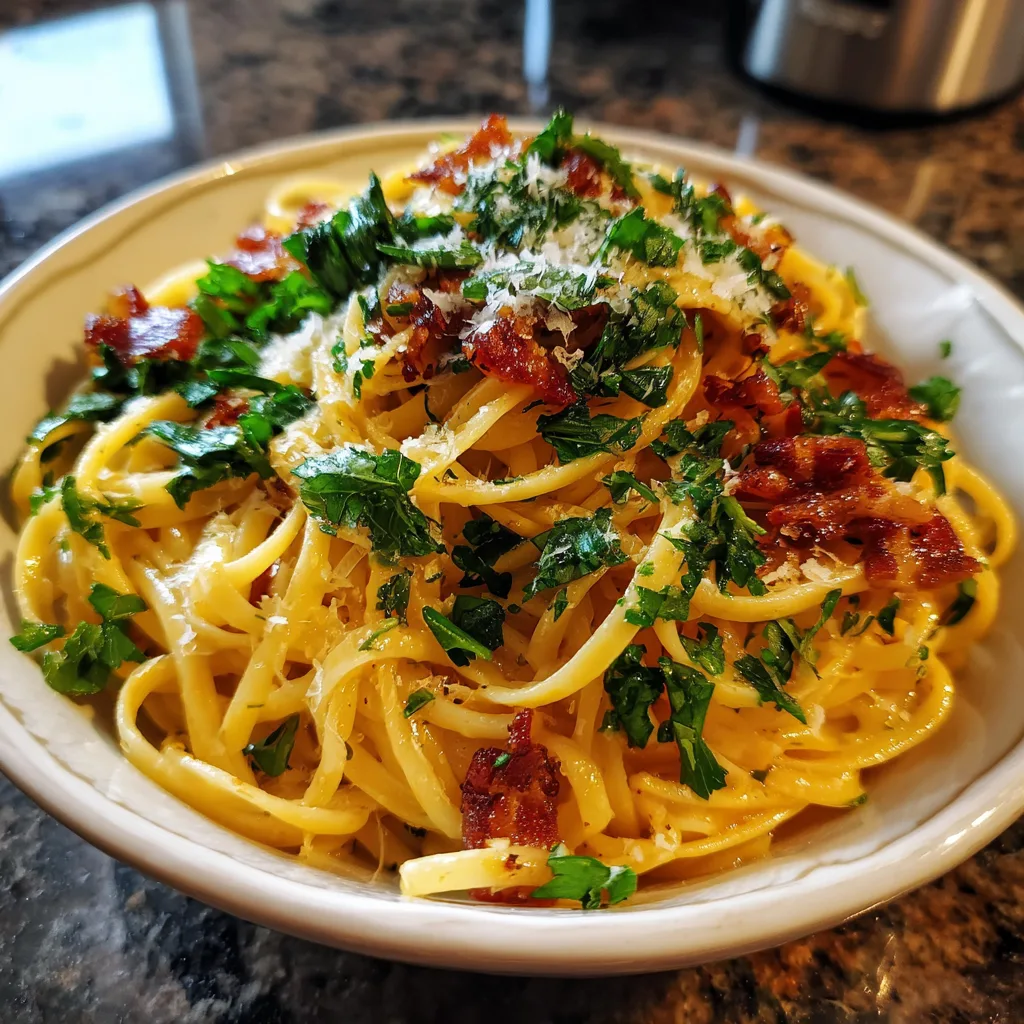
Few dishes demonstrate the beauty of simplicity quite like Pasta Carbonara. With just a handful of carefully chosen ingredients, this Roman classic transforms into a silky, deeply flavorful meal that feels both rustic and refined. The magic lies not in cream—despite common misconceptions—but in the emulsion created by eggs, cheese, pasta water, and rendered pork fat. When done correctly, the sauce clings luxuriously to every strand of pasta without scrambling or becoming heavy.
The first time I prepared carbonara properly, I realized how essential technique is. I remember being tempted to add cream for safety, but once I trusted the process, the result was far superior—velvety, glossy, and perfectly balanced. A generous amount of freshly cracked black pepper makes all the difference, cutting through the richness beautifully. Whether you are cooking for a quiet dinner at home or hosting friends, this dish delivers impressive flavor with minimal ingredients and effort.
Print
Authentic Pasta Carbonara – A Creamy Roman Classic Made the Traditional Way
- Total Time: 25 minutes
- Yield: 4 servings
- Diet: Halal
Description
Pasta Carbonara is a classic Italian dish made with hot pasta tossed in a silky sauce of eggs, hard cheese, crispy pancetta, and freshly ground black pepper.
Ingredients
- 12 oz spaghetti or fettuccine
- 6 oz pancetta or turkey bacon, diced
- 2 large eggs
- 1 large egg yolk
- 1 cup freshly grated Parmesan or Pecorino Romano cheese
- 2 cloves garlic, minced (optional)
- 1/2 teaspoon freshly ground black pepper
- Salt, to taste
- 1/4 cup reserved pasta water (as needed)
Instructions
- Bring a large pot of salted water to a boil and cook pasta until al dente. Reserve 1/2 cup of pasta water before draining.
- While pasta cooks, heat a skillet over medium heat and cook pancetta until crispy. Add garlic if using and sauté briefly. Remove from heat.
- In a bowl, whisk together eggs, egg yolk, grated cheese, and black pepper.
- Add hot drained pasta to the skillet with pancetta and toss to combine.
- Remove skillet from heat and quickly stir in the egg mixture, tossing constantly to create a creamy sauce. Add reserved pasta water a little at a time if needed to loosen the sauce.
- Serve immediately with extra grated cheese and black pepper on top.
Notes
- Work quickly when adding the egg mixture to prevent scrambling.
- Do not return the pan to direct heat after adding eggs.
- Use freshly grated cheese for best texture and flavor.
- Traditionally made without cream; the sauce thickens from eggs and cheese.
- Prep Time: 10 minutes
- Cook Time: 15 minutes
- Category: Main Course
- Method: Stovetop
- Cuisine: Italian
Why You’ll Love This Recipe
This Pasta Carbonara is quick, elegant, and deeply satisfying. It uses simple pantry ingredients yet produces a restaurant-quality result. The sauce is rich but not heavy, and the sharp cheese combined with savory pork creates a bold, unforgettable flavor. It comes together in about 20 minutes, making it perfect for both weeknight dinners and special occasions.
Ingredients
(Tip: You can find the complete list of ingredients and their measurements in the recipe card below.)
Spaghetti
Traditional carbonara uses spaghetti, which holds the silky sauce beautifully. Other long pasta shapes like linguine or bucatini also work well.
Guanciale
Guanciale, cured pork cheek, is the authentic choice. It renders rich fat that forms the base of the sauce and adds deep savory flavor.
Eggs
Whole eggs combined with egg yolks create the creamy texture of the sauce without any cream.
Pecorino Romano Cheese
Pecorino Romano provides sharp, salty intensity that defines classic carbonara. Freshly grated cheese melts more smoothly into the sauce.
Freshly Cracked Black Pepper
Black pepper is essential, adding warmth and subtle spice that balances the richness.
Salt
Salt seasons the pasta water and enhances the final flavor, though use it carefully since the cheese and guanciale are already salty.
Directions
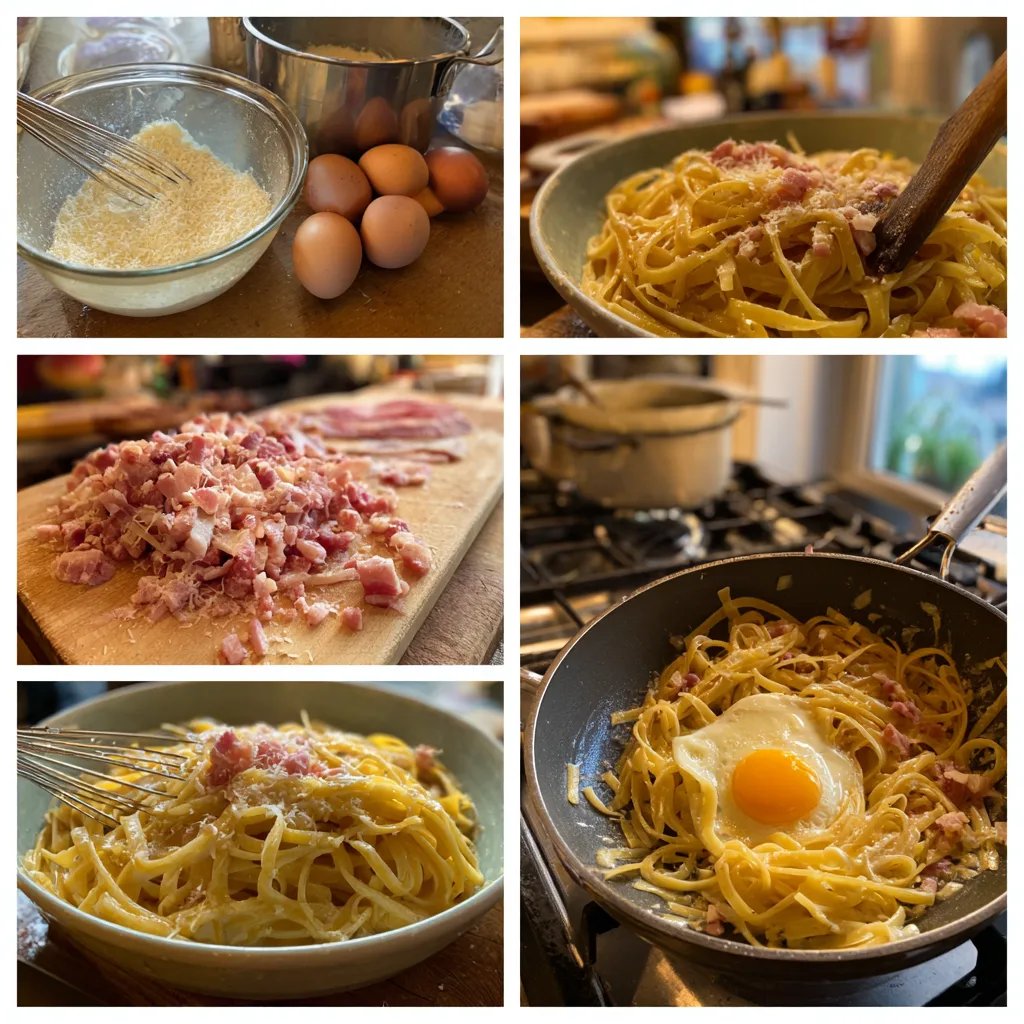
Bring a large pot of generously salted water to a boil. Cook the spaghetti according to package instructions until al dente. Reserve about one cup of pasta water before draining.
While the pasta cooks, dice the guanciale into small strips or cubes. Place it in a cold skillet, then turn the heat to medium. Cook slowly, allowing the fat to render and the guanciale to become golden and crisp, about 5 to 7 minutes. Remove from heat but keep the rendered fat in the pan.
In a mixing bowl, whisk together the eggs, additional yolks, and freshly grated Pecorino Romano. Add a generous amount of black pepper and mix until smooth.
Add the drained pasta directly to the skillet with the warm guanciale and its fat. Toss to coat the pasta evenly. Allow it to cool slightly for about 30 seconds to prevent scrambling the eggs.
Pour the egg and cheese mixture over the pasta, tossing continuously and quickly. Add small splashes of reserved pasta water as needed to create a smooth, glossy sauce that clings to the pasta. The residual heat will gently cook the eggs into a creamy consistency. Serve immediately with extra Pecorino and black pepper on top.
Equipment needed : Must-Have Tools to Get Rolling
Here’s what you’ll want to have on hand:
Silicone Spatula – Durable, heat-resistant silicone spatula perfect for mixing, scraping, and spreading. Gentle on non-stick cookware and easy to clean.
Large pot – You’ll need this to boil the whole cabbage head and soften the leaves.
large bowl –Spacious, durable large bowl ideal for mixing, serving, or food preparation. Made from sturdy material and easy to clean.
Sharp knife – For coring the cabbage and slicing out the thick stem in each leaf. A paring knife works best.
Mixing bowl – A big bowl makes it easier to combine your meat and rice filling evenly.
Cutting board – For prepping cabbage leaves and rolling them like a pro.
Full-Size Blender – is a powerful kitchen appliance for making smoothies, soups, and sauces in large batches.
3-in-1 Air Fryer – This versatile 3-in-1 air fryer offers Air Fry for healthier meals with less oil, Bake for bakery-quality desserts and treats, and Reheat to bring leftovers back to life with crispy, flavorful results
Servings and timing
Serves 4.
Preparation time: 5 minutes
Cooking time: 15 minutes
Total time: 20 minutes
Storage/reheating
Carbonara is best enjoyed fresh, as the sauce can thicken when refrigerated. Store leftovers in an airtight container for up to 2 days. Reheat gently in a skillet over low heat with a splash of water to loosen the sauce, stirring constantly to prevent scrambling.
Variations and Customizations
Although traditional carbonara uses guanciale, pancetta is a widely accepted substitute. Bacon can also be used, though it will add a smokier flavor that slightly alters the authenticity of the dish.
If Pecorino Romano feels too sharp, try blending it with Parmigiano-Reggiano for a milder taste. However, keep in mind that classic Roman carbonara relies primarily on Pecorino for its signature flavor.
For those who prefer a richer sauce, increase the ratio of egg yolks to whole eggs. I have tried using three yolks and one whole egg, and the texture became exceptionally silky and luxurious.
You may also experiment with different pasta shapes. Bucatini offers a thicker bite, while rigatoni captures bits of guanciale inside the tubes.
For a lighter variation, reduce the amount of pork slightly and increase the pasta water to maintain creaminess without additional fat. Vegetables are not traditional, but a small handful of sautéed peas can add color if desired.
The key to customization is maintaining balance: creamy but not heavy, salty but not overwhelming, and always freshly cracked pepper for depth.
Nutrition and Dietary Info
Approximate values per serving:
| Nutrient | Amount per Serving |
|---|---|
| Calories | 650 kcal |
| Protein | 28 g |
| Carbohydrates | 62 g |
| Fat | 32 g |
| Saturated Fat | 12 g |
| Fiber | 3 g |
| Sugar | 2 g |
| Sodium | 780 mg |
This dish is high in protein and rich in fats from eggs and cured pork. For a slightly lighter profile, reduce the amount of guanciale and use one fewer yolk.
Expert Tips & Customizations
Temper the Pasta
Allow the pasta to cool slightly before adding the egg mixture to avoid scrambling.
Reserve Pasta Water
The starchy water is essential for achieving a smooth, glossy sauce.
Grate Cheese Finely
Finely grated cheese melts faster and creates a silkier texture.
Work Quickly
Toss continuously once the eggs are added to ensure even cooking.
Serve Immediately
Carbonara waits for no one; serve as soon as it reaches perfect creaminess.
FAQs
Does authentic carbonara contain cream?
No, traditional carbonara relies solely on eggs, cheese, pasta water, and rendered pork fat for creaminess.
Can I use bacon instead of guanciale?
Yes, though it will add a smokier flavor that differs slightly from the traditional version.
Why did my eggs scramble?
The pasta was likely too hot. Allow it to cool slightly and toss quickly to create a smooth sauce.
What is the best pasta shape for carbonara?
Spaghetti is traditional, but bucatini and rigatoni are also excellent choices.
Can I make carbonara ahead of time?
It is best served immediately, as reheating can alter the sauce’s texture.
How do I make it extra creamy?
Increase the number of egg yolks and use reserved pasta water gradually to adjust consistency.
Conclusion
Authentic Pasta Carbonara proves that a few high-quality ingredients and proper technique can create an extraordinary meal. Its silky sauce, savory guanciale, and sharp Pecorino Romano come together in perfect harmony, offering comfort and elegance in every bite. Master this timeless Roman classic, and you will always have an impressive yet effortless dish ready for any occasion.
Hungry for more? Visit our website for full recipes and follow us on Pinterest for daily foodie inspo you’ll love to pin!